o frabjous day!

books, recipes, parenting & other things

About

Cool Links

  • This is one of Clotilde’s recipes, and very delicious it is too. I must say, when I look at the above picture, I don’t find it looks particularly appetising – I prefer my broccoli crisply steamed – but I assure you that it tastes beautiful. The polenta based cake is crisp on the bottom, and the delicious tang of cottage cheese in the mixture goes very well with the broccoli. I was also a little doubtful about the raisins, but they also go nicely with the other ingredients. It’s also very convenient to slice and take to work for lunch, which is always a bonus. I followed the recipe exactly, but shall reproduce it below for convenience’s sake.

    one head of broccoli
    200 g (3/4 cup) cottage cheese
    125 g (1/2 cup) plain yogurt
    2 eggs
    1 tablespoon olive oil
    1/2 cup polenta
    1/2 cup wholemeal or plain flour
    1 1/2 teaspoons baking powder
    a handful of raisins
    a handful of walnuts, toasted and chopped
    salt, pepper

    Wash the broccoli and cut it into florets. Bring some salted water to a boil in a large saucepan, add in the broccoli and let simmer for 8 minutes, until cooked but not limp. Drain and run cold water on it to stop the cooking. Set aside in a colander to drain thoroughly while you take the next steps.

    Preheat the oven to 180°F (360°F). Grease a 20 cm (8-inch) cake pan, unless it’s nonstick.

    In a medium mixing-bowl, whisk together the cottage cheese, yogurt, eggs and oil, and sprinkle on salt and pepper. In another medium mixing-bowl, combine the cornmeal, flour and baking powder. Fold the liquid mixture into the dry mixture until just combined (the batter will be thick). Do not overmix, it’s fine if it’s still a little lumpy.

    Arrange the cooked broccoli at the bottom of the cake pan. Season with salt and pepper, and sprinkle on the walnuts and raisins. Pour the batter evenly over the broccoli, and smooth it out a bit with a spatula.

    Put into the oven to bake for 30 to 40 minutes, until the top is golden and crispy. Let rest on the counter for 5 minutes. Run a knife around the pan to loosen the cornmeal crust, cover the pan with a serving plate, and flip quickly (protect your hands with a kitchen towel of course) so the cake lands, broccoli-side up, on the plate.

    Cut in wedges, preferably with caution and a sharp knife, so as not to smoosh the broccoli. Serve warm, at room-temperature or cold. Reheat leftovers for ten minutes in the oven if you wish to revive the crispiness of the crust.

  • This is a recipe from Lana, who often seems to come up with fabulous vegetarian recipes I haven’t tried before. This is a very thick and delicious dip or spread, and is such a gorgeous colour, I don’t know how you can resist making it. Perfect picnic food.

    2-3 large fresh beetroots
    4 cups dried chickpeas
    1 tablespoon cumin seeds
    olive oil
    salt

    Soak the chickpeas in water overnight. Cook them in fresh water on a high heat until they are soft. To test this, they should make a paste when you squeeze them between 2 fingers. This will take about 45 minutes to an hour in a normal saucepan, or 15 minutes if you’re using a pressure cooker.

    Boil the beetroots whole, with the skin on. When they’re soft (about 30 minutes), remove them from the heat, and rub them to remove their skin. Chop them into medium pieces, to fit into your food processor.

    Put the chickpeas and beetroot into your food processor and whiz until smooth. Add cumin seeds, salt and olive oil to taste.

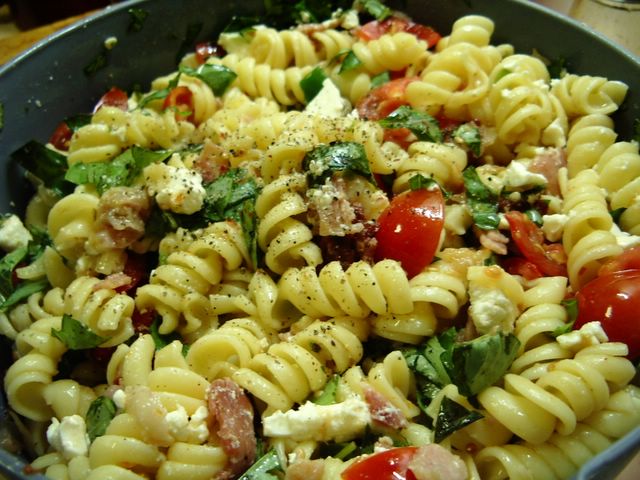
  • This is a delicious recipe from The Daily Bread, which I’ve altered a little, and renamed. It’s a very garlicky pasta dish, and is also fairly oily – in a lovely way, but it mightn’t suit delicate stomachs. Good both warm and cold, this is a wonderfully versatile dish. I can foresee it appearing in many dinner menus in the future.

    1/2 cup olive oil
    1 head of garlic – excess paper removed
    500g small pasta
    1 bunch fresh basil
    200g bacon
    200g Tasmanian feta cheese
    1/2 cup sundried tomatoes
    1 punnet cherry tomatoes

    Preheat the oven to 160C. Put the head of garlic in a small heatproof pot – I used a big coffee mug – and pour the olive oil over the top. Bake for about an hour, until it’s golden and soft.

    While the garlic’s baking, chop the bacon into small bits and fry until nicely crisp. Set aside. Slice the sundried tomatoes into small pieces, chop the cherry tomatoes into quarters, and roughly chop the basil.

    When the garlic is nearly ready, cook the pasta until tender. Pour into a large mixing bowl.

    When the garlic is baked, remove it from the oil. Squeeze the soft baked garlic from its cases – it may be easier to slip the cloves free with a fork. Pour the oil over the pasta – if you want the pasta to be less oily, don’t pour the entire amount on. Add the bacon, sundried and cherry tomatoes, and basil. Mix well. Crumble the feta cheese over the pasta, and mix in. Add pepper to taste, and eat immediately.

  • I haven’t made biscuits for years, but suddenly felt the urge to today. I’m planning on taking my excess baking to work tomorrow, and I thought a few biscuits would go down well. This is a chocolate chip recipe from a generic cookbook called Better Baking, which I’ve altered by adding the cranberries. They’re very buttery – I’d like to try some different recipes so I can compare.

    125g (1/2 cup) butter or margarine
    1 cup brown sugar
    1 egg, beaten
    1 tsp vanilla essence
    1 3/4 cups self raising flour
    3/4 cup dried cranberries
    1/2 chocolate chips

    Pre-heat the oven to 180C. Cream the butter and sugar together until light and fluffy. Beat in the egg and the vanilla.

    Blend in the flour – this will make the mixture quite stiff. Beat in the cranberries and chocolate chips.

    Roll the mixture between your palms into walnut sized balls, and then lightly squash down onto well greased trays. Bake for 15 minutes. Cool on a wire rack, and store in an airtight container.

  • This is a light, warm, lemony salad. I had a slightly different version at a friend’s house, and have since adapted it for taste, and to suit what I’ve had in the fridge. The roast sweet potato goes well with a green crunch – here I’ve used green capsicum, but baby spinach is lovely as well. I’ve always eaten this on its own, or with other salads, but I think it would go beautifully with lamb or chicken.

    1 reasonably large sweet potato
    2 carrots
    1 green capsicum
    1 cup couscous
    half a lemon
    olive oil
    ground cumin

    Preheat the oven to 200C. Peel the sweet potato, slice it in half lengthwise, and cut it into fairly thin slices. You’re aiming for a crisp outside and soft inside – no tiny slivers, but no huge chunks either. Slice the carrots into short strips.

    Layer the sweet potato slices and carrot strips onto an oiled tray – you may need to use two, as you don’t want the vegetables piled on top of each other. Grind some pepper over them, and then cook for about 20 minutes. Turn up the oven to 250C, and bake for another 10 minutes to make them crisp.

    While the sweet potato is baking, chop the capsicum into small pieces. Cook one cup of couscous according to the instructions on the pack.

    When the vegetables are out of the oven, make the dressing. Lightly squeeze half a lemon into a small bottle, add 4-5 tablespoons of olive oil, a teaspoon of cumin powder, and shake the mixture until well combined. The amounts in the dressing depend very much on personal taste – this is quite lemony, and you may want to increase the cumin and the oil.

    In a large bowl, combine the couscous, roasted vegies and capsicum with your hands. Pour the dressing over, and stir in with a fork. Turn the salad into the serving bowl, and enjoy.

    Variations: baby spinach, roasted mushrooms, chilli, roasted or grilled chicken, canned artichoke hearts, grilled red capsicum, or grilled eggplant.

  • This is a delicious, richly spiced and dense cake. It’s a recipe from Doris Brett’s Australian Bread Book, which I think is now out of print, but is a wonderful book full of unusual cakes and breads. This particular cake is not only very easy and quick to make, but also versatile – it can be an afternoon tea cake, or a dessert if served with cream.

    one and a half cups sugar
    two and a half cups white flour
    one teaspoon salt
    one teaspoon each of cinnamon, all spice, and nutmeg
    one teaspoon baking soda
    one cup vegetable oil
    three eggs, lightly beaten
    two teaspoons vanilla essence
    one cup buttermilk (or milk with one tsp vinegar added)
    twenty-four large pitted prunes, chopped
    one cup chocolate bits

    Firstly, heat the oven to 180C. Then the method couldn’t be simpler – simply mix all the ingredients into a bowl. I put the flour, sugar, spices and baking soda in first, make a well, and pour in all the wet ingredients. After mixing well, I stir in the prune pieces and the chocolate. Done!

    Grease a loaf tin well, and pour the cake mixture in. Bake for 1 hour and 10 minutes, and then check on it fairly regularly. The top of the cake should bounce back a little. My oven isn’t fan-forced, so in a fan-forced oven, it will cook much faster.

    Variations – replacing the chocolate bits with sultanas, dried cranberries or dates.

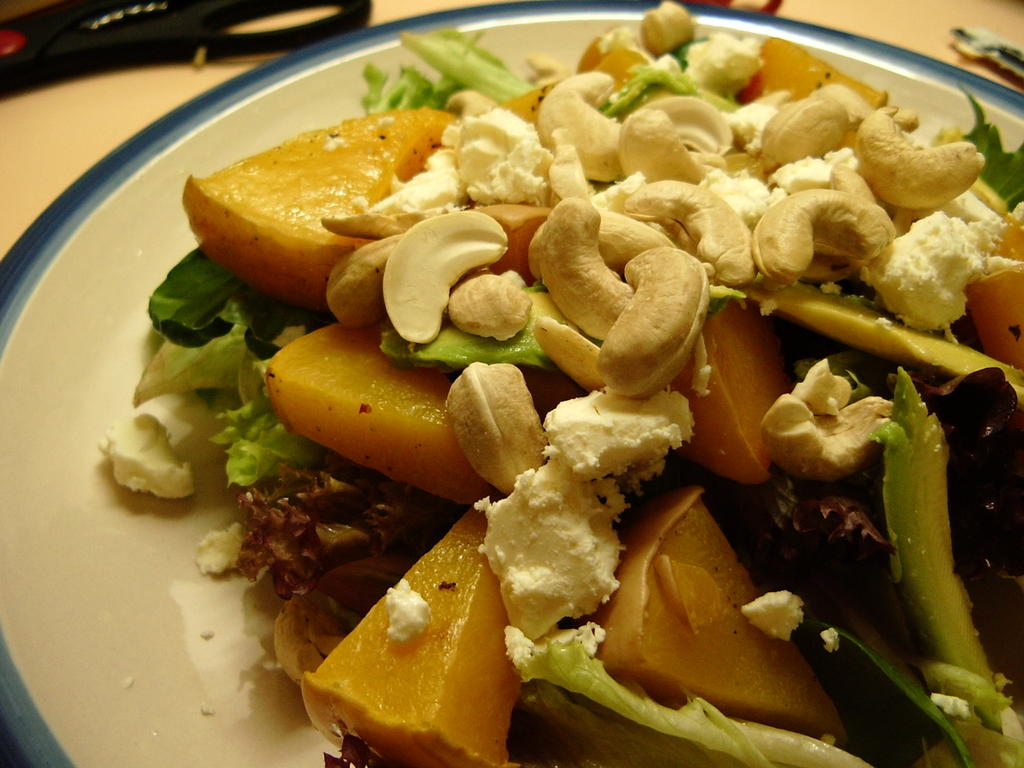
  • This is more of an idea than a strict recipe. I like it during the week, as it’s the sort of thing you can start, wander off and do something else, and then return to the kitchen, and put the salad together. It’s a delicious light dinner, although it can easily be made more filling.

    half a butternut pumpkin
    feta cheese
    cashew nuts
    avocado
    tinned artichoke hearts
    mixed leaves or baby spinach

    Chop the pumpkin into small triangles, and bake at 180C for 30-40 minutes. Leave the skin on – it’s soft, edible and delicious.

    Once the pumpkin is baked, and cooled a little, put together the salad. Put the mixed leaves or spinach in a bowl, and top with the pumpkin, slices of avacado, crumbled feta cheese, sliced artichoke hearts and a scattering of cashew nuts across the top. Dress with a balsamic vinegar and olive oil dressing.

    Other variations – slices of roasted chicken, baked mushrooms, grilled zucchini slices, semi-dried tomatoes – the possibilities are endless.

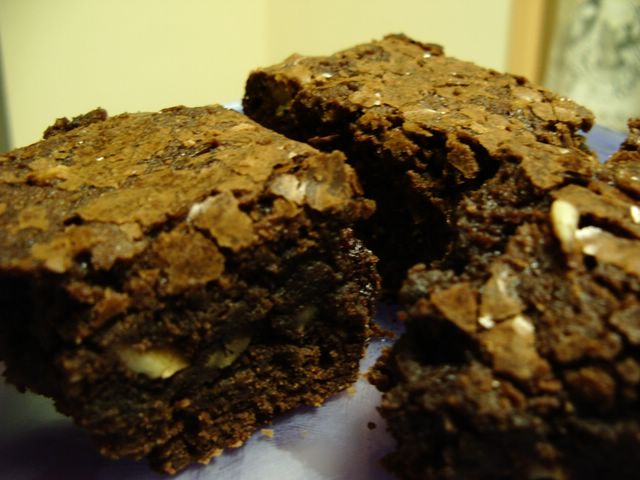
  • This is a recipe for utterly divine, dense, rich brownies. It’s a huge recipe, and I haven’t been brave enough to experiment with halving it. I’ve found people quite enjoy being pressed to eat brownies, so I haven’t minded having enormous amounts of them. The original cooking time in Nigella’s recipe (from her book How to Be a Domestic Goddess) didn’t work for me at all, which I think might be because she uses a fan forced oven, so I had to do a little experimenting. However, I think I’ve got it just about right.

    375g (1 1/2 cups) soft butter
    375 g dark chocolate
    6 large eggs
    1 tblsp vanilla extract
    500g (3 cups) caster sugar
    (I know, this seems insanely excessive. I’ve used 2 1/2 cups, and that’s fine. You could probably reduce it to 2)
    225g (just under 2 cups – 1 7/8) plain flour
    300g chopped walnuts
    (I made up this weight with almonds and sultanas)

    Preheat the oven to 180C (that’s Nigella’s suggestion for temperature – in my non-fan forced electric oven, I used 190C).

    Grease and line a baking tin measuring approx. 33 by 23 by 5.5 cm.

    Melt the butter and chocolate together in a large saucepan. In a bowl, beat the eggs with the sugar and vanilla. Measure the flour into another bowl.

    When the chocolate mixture has melted, let it cool for a bit (I usually melt the chocolate mixture first, and then beating the eggs and measuring out the flour gives it time to cool). Beat the egg mixture into the chocolate, and then add the nuts and flour. Beat until smooth, and pour into the lined pan.

    Bake for 25 minutes. (At 190, I baked it for 45 minutes, and then checked it every five minutes, until the top was crusty and fairly firm, but a skewer still came out with mixture on. They solidify and continue to cook as they cool).

    A variation on the recipe – the 300g of walnuts is replaced with 170g of dried cranberries, and 130g of walnuts. The cranberries expand juicily into scrumptious red dots of fruit – very attractive.

  • This is the first time I’ve attempted to make cannelloni, and I decided to try after reading a recipe of Rick Stein’s, which this recipe has been rather loosely adapted from. It’s an easy recipe, using fresh lasagne sheets to roll up the filling – very cheesy and satisfying. It is fiddly, wrapping up each individual little roll, and I’ve found it’s much easier with two people – one to dollop on the filling, and the other to roll up the pasta and put it in the tray.

    3 leeks, thinly sliced
    1 capsicum, chopped into small pieces
    A few handfuls of mushrooms, sliced
    200g of ham, cut into strips
    A handful of fresh oregano, chopped (or a few good shakes of dried herbs – oregano, basil and chilli are good)
    About 250g of ricotta or aged cheddar
    Salt and pepper
    1 pack of fresh lasagne sheets
    Bottled tomato pasta sauce
    Extra cheddar cheese

    Preheat your oven to 200C. In a large saucepan, melt a little butter, then saute the leeks, capsicum, mushrooms and ham for about 10 minutes, or until it’s reduced down. At this stage, if there’s a little excess liquid, pour it off. Season well, to your taste, and then take off the heat. Stir in the cheese. We used cheddar, but Rick Stein uses ricotta, which would probably give them quite a different texture.

    While the leek mixture is cooking, put the lasagne sheets in a deep tray, and soak in boiling water for 5 minutes. Just before you’re reading to begin rolling the cannelloni, transfer the pasta to a plate, tearing the sheets in half. If they begin to stick together while you’re making the pasta, pour a little hot water over them.

    Oil a large tray with sides to bake the cannelloni on, and then pour in a reasonable amount of bottled pasta sauce, spreading it evenly around.

    In order to prepare the cannelloni, you’ll need the plate with the lasagne sheets, a plate to roll the canneloni on, the leek mixture, and your oiled and tomatoed tray. Tear the lasagne sheets in half. Grab each half-sheet on at a time, and place on your spare plate. Spoon some of the leek mixture along one edge, and roll up the sheet, placing it in the tray. Continue, until you’ve filled your tray, used up all your lasagne sheets, or run out of leek mixture.

    Pour a little more pasta sauce into the tray, and spread it generously over the cannelloni. Sprinkle over a little extra cheese, and bake for 20 minutes. Delicious.

    Variations are endless, as you can use practically anything for the filling, and change the flavour quite dramatically if you use different cheeses.

  • We drove up to Mt Tamborine this morning, ostensibly to go to the local produce markets, although we arrived a little late and there wasn’t much of anything left. We did grab some beautifully fresh avocados and mushrooms, and couldn’t resist a bottle of mulberry and rhubarb jam – dark and delicious looking.

    After peeking at some cottages and wondering if we could afford a weekend in front of a fire with a mountain view, we headed for the tourist strip filled with galleries, cafes and fudge shops. I had to buy Lemon Meringue Fudge, which I’d had once before – deliciously tangy.

    We stopped off at a butcher in Logan Village on the way home, where the butcher’s three young children were in the shop with him, making rissoles and serving customers. The young girl who served us was probably 10 or 11, and carefully picked up the Italian sausages we bought with her bare hands, stuffing them into the plastic bag, before frowning at the scales, trying to figure out how much we had to pay her. I wondered if they resented having to help out their father on the weekends. Perhaps he pays them pocket money in return.